
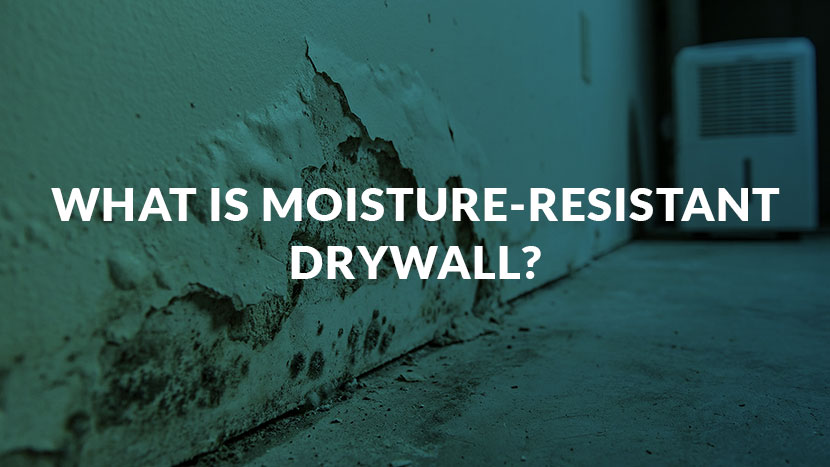
Whether you’re planning a new bathroom renovation or finishing the basement, moisture-resistant drywall feels like a smart, protective investment. For a space that will inevitably see steam, humidity, and maybe a few splashes, you could have just made your walls waterproof and mold-proof. This common assumption, however, is a dangerous one.
Some might believe that “moisture-resistant” and “waterproof” are interchangeable, but they are not. Misunderstanding the difference can result in thousands of dollars in hidden damage, structural decay, and severe mold problems down the line. CLEAR Restoration will help debunk the myths surrounding moisture-resistant drywall and explain its proper application.
When a pipe bursts or a slow leak finally makes itself known, the limitations of building materials are put to the test. At CLEAR Restoration, our water damage restoration team specializes in responding to these emergencies with speed and precision. Contact us today to find and eliminate hidden water damage before it can lead to structural rot and mold.
[Related: Understanding and Addressing Drywall Water Damage]
What is Moisture-Resistant Drywall, Really?
To understand the limitations of this popular building material, we first need to understand what moisture-resistant drywall is—and what it isn’t. Manufacturers design moisture-resistant drywall for specific jobs: to perform well in areas with high ambient humidity.
Think of the walls in your main bathroom (but crucially, not inside the shower stall itself), the area behind your kitchen sink, your laundry room, or a well-maintained basement. In these zones, the primary job of moisture-resistant drywall is to resist the degrading effects of constant humidity and condensation. It prevents materials from breaking down, peeling, or becoming a breeding ground for surface mold in damp, but not wet, conditions.
Moisture-resistant drywall is the right tool for the right job, but only when that job is managing atmospheric moisture, not direct water contact.
The Expert Debunk: Moisture-Resistant vs. Waterproof
It is vital to draw a clear line between a product that resists moisture and one that is truly waterproof to avoid a catastrophic problem. Think of moisture-resistant drywall like a rain jacket. It can handle occasional splashes and high humidity, but it will fail in a downpour.
When moisture-resistant drywall gets wet from a plumbing leak, flood, or constant saturation from a cracked shower tile, it will absorb the moisture like a sponge. It will soften, swell, and eventually crumble, losing all of its structural integrity. The moisture can even become trapped behind some of the water-repelling material, creating a dark, damp, and stagnant environment within your wall cavity, providing the perfect conditions for mold to flourish.
CLEAR Restoration’s Moisture Control Strategy
A proper moisture control strategy is a multi-layered defense that ensures water never has the chance to compromise your home’s structure. You never want to solely rely on a sheet of moisture-resistant drywall to protect a vulnerable area. When CLEAR Restoration approaches a restoration project, we look beyond the damaged material to the system as a whole. The elements of a “right the first time” approach include:
- Source Control: The first and most critical step. This means immediately addressing and repairing the source of any water, whether it’s a plumbing leak, a faulty appliance, a roof leak, or foundation seepage. Without this, any repair is just a temporary patch.
- Proper Ventilation: Water in its vapor form—humidity—needs an escape route. High-powered, properly vented exhaust fans in bathrooms and kitchens are non-negotiable. They actively remove humid air before it has a chance to condense on walls and ceilings.
- Waterproof Membranes: In truly wet areas like shower stalls and tub surrounds, moisture-resistant drywall is the wrong product. Here, you need a genuinely waterproof system. This involves using cement backer board, which is unaffected by water, and applying a liquid or sheet-style waterproof membrane over it before tiling. This creates an impenetrable barrier.
- Sealing and Caulking: Water is opportunistic. It will find the smallest gap. Ensuring that all plumbing fixtures, joints between different materials, and any wall penetrations are meticulously sealed with high-quality, waterproof caulk is essential.
Our process involves identifying the why behind the water damage. Was the exhaust fan underpowered? Did the caulking around the tub fail? Is there a slow leak behind the wall? By answering these questions, we ensure our water damage restoration work is a permanent solution.
Your Property Has Water Damage – Now What?
Even with the best intentions, systems can fail. It’s crucial to recognize the signs that your moisture-resistant drywall has been compromised and is hiding a bigger problem. Be on the lookout for soft or spongy spots on the wall, peeling paint or bubbling wallpaper, brown or yellow discoloration, and a persistent musty odor that you can’t seem to locate. Any visible mold growth, no matter how small, is a definitive red flag that the material has failed.
The CLEAR Restoration process is thorough:
- Assessment: We don’t guess where the water went. We use professional tools, like moisture detection meters, to precisely map the full extent of the water intrusion, often revealing that the affected area is far larger than what is visible to the naked eye.
- Remediation: Our certified technicians follow strict industry standards for the safe containment and removal of all water-damaged materials and any associated mold growth. This protects your family’s health and prevents cross-contamination.
- Restoration: We rebuild by thoroughly drying the structure, treating it to prevent future mold growth, and restoring it with the correct materials for the area, all while addressing the systemic failure that caused the problem in the first place.
When you discover these signs, the temptation might be to perform a simple surface-level fix: cut out the damaged section, let it “air out” for a day, and patch it with a new piece. This is one of the most common and costly mistakes a homeowner can make. This approach almost guarantees that you are sealing hidden mold and trapped moisture inside your walls, allowing the problem to fester and spread unseen.
[Related: Types of Water Damage: What You Need to Know]
Contact CLEAR Restoration for Water Damage Restoration
Worried about moisture in your walls? Dealing with the aftermath of a leak and concerned about what might be hiding behind your moisture-resistant drywall? Get a clear answer and restore your peace of mind by contacting the experts at CLEAR Restoration today for a comprehensive assessment and professional water damage restoration services.