
Walk outside, look at the lush Louisiana landscape, and you might assume the biggest threat to your home is a rogue hurricane. However, the true menace often lurks below your feet: mold in crawl space areas. When spores settle on damp wood or insulation, a small patch can evolve into a colony that undermines your health, your property value, and even your insurance coverage.
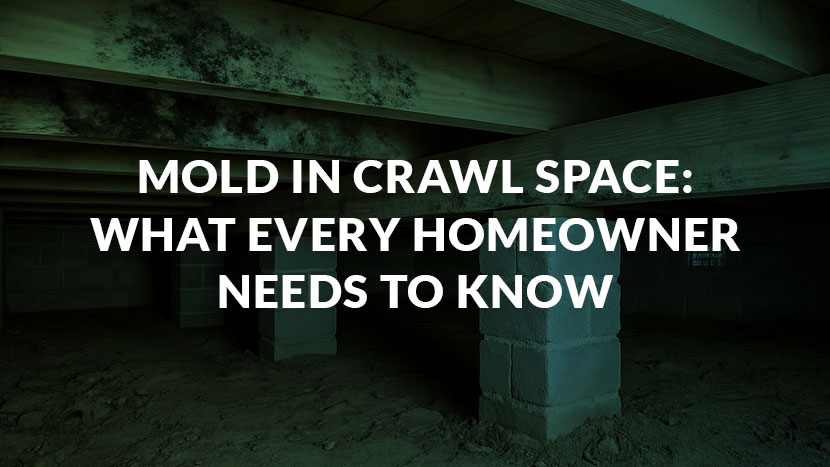
Mold in crawl spaces usually means fungal growth on the wooden joists, subfloor, insulation, or mechanical lines that run beneath a pier-and-beam or raised foundation house. Because this area is out of sight, it’s easy to ignore – until musty odors creep indoors or a home inspector delivers bad news.
Learn the warning signs of mold in your crawl space, how to prevent an outbreak, and when to call a professional mold abatement company. CLEAR Restoration offers expert mold abatement that will restore your peace of mind and protect your home’s structural integrity. Call 225-245-3575 today so we can take care of your mold problem promptly.
[Related: Mold in Your Crawl Space is Bad News for Your Health]
Why the Crawl Space is a Mold Magnet
If you designed the perfect laboratory for mold, you’d start with Louisiana’s climate: high humidity, torrential rain, and warm temperatures that rarely let lumber fully dry. Crawling under a house puts all these factors into an enclosed, poorly ventilated box.
Humidity above 60% allows spores to germinate on wood, and poor ventilation leads to lingering moisture from stagnant air. Other factors, like uninsulated plumbing and HVAC lines “sweating” dripping onto joists, or flooding, heavy rain, and sudden winter warm-ups, deliver moisture surges that crawl spaces can’t exhaust quickly enough.
Combine those ingredients and you have an underground micro-climate that rivals a tropical greenhouse. Understanding these conditions is step one; step two is recognizing the red flags that tell you mold in the crawl space has already taken hold.
Red Flags You Might Have Mold in Crawl Space
Mold in your crawl space rarely announces itself with a neon sign, but it does send subtle—and not-so-subtle—signals. Pay attention to the following cues before the problem turns into an expensive remediation:
- Musty odors drifting upward through floor vents or cracks in hardwood.
- Warped, buckling, or cupping wood floors—moisture from below swells planks.
- Increased indoor allergy or asthma symptoms, especially at night when HVAC cycles air from beneath the house.
- Dark blotches or white fuzzy growth on joists, beams, or the subfloor when you peek inside.
- Elevated indoor humidity that persists even while the AC runs efficiently.
If you recognize two or more of these symptoms, schedule an inspection to make sure you’re dealing with mold in your crawl space rather than chalk it up to “just Louisiana air.” Early detection can shave thousands off remediation and protect your family’s lungs.
Health Risks of Ignoring Mold in Crawl Space
Mold spores are microscopic hitchhikers. Once airborne, they infiltrate living spaces through gaps around plumbing, HVAC penetrations, or even tiny nail holes. Breathing those spores may trigger a range of ailments, so it is important to address mold in your crawl space as soon as possible. Some of the health impacts of mold include:
- Respiratory irritation, persistent dry cough, or sinus congestion.
- Exacerbation of pre-existing asthma, COPD, or allergies.
- Headaches, fatigue, and brain fog linked to prolonged exposure.
- For sensitive individuals, mycotoxin-producing species can lead to more severe neurological or immune responses.
Bottom line: ignoring mold in the crawl space isn’t just a property gamble—it’s a health gamble. What starts beneath your home ends inside your lungs, making prompt action critical.
Structural & Financial Consequences of Mold in Crawl Spaces
Health issues are only half the equation; the other half shows up in repair bills. Mold feeds on cellulose, the very substance wood is made of, meaning your home’s skeleton is literally dinner. Mold in crawl spaces has massive repercussions for property owners, such as:
- Wood rot that weakens joists, beams, and sill plates, leading to sagging floors.
- Deteriorated insulation that loses R-value, forcing HVAC systems to run longer and raising energy costs.
- Lower resale value; buyers often bolt when they hear “crawl-space mold,” or they demand steep discounts.
- Failed home inspections and delayed closings.
- Insurance claim denials for neglect—policies typically require homeowners to mitigate mold promptly.
Allowing mold to persist transforms a preventable maintenance issue into a structural rehab project. With stakes this high, it is essential to partner with mold abatement professionals to prevent structural damage to your home and costly repairs. Contact CLEAR Restoration for expert mold abatement that eliminates mold in your crawl space, protects your home, and restores your peace of mind.
Mold in Crawl Space: DIY or Professional Remediation?
Search “mold remover” online and you’ll see countless spray bottles promising miracles. But can you handle the mold in the crawl space on your own? Sometimes, but it’s important to know the limitations and when to call in the professionals. Here’s why the experts have the edge:
- Store-bought sprays kill surface mildew but can’t penetrate porous joists where roots (hyphae) hide.
- Certified teams establish negative-air containment to keep spores from migrating into living areas.
- Commercial-grade HEPA vacuums trap microscopic particles that ordinary shop-vacs recirculate.
- Pros remove and discard contaminated insulation under EPA guidelines.
- Antimicrobial sealants create a protective barrier so regrowth is less likely.
But here’s when DIY mold abatement might suffice:
- The affected area is smaller than a single sheet of plywood.
- Mold is light surface staining, not fuzzy or deeply rooted.
- You’ve already fixed the moisture source (leaky pipe, missing vapor barrier).
- You own proper PPE—N95 mask, goggles, gloves—and follow manufacturer instructions.
In most scenarios, particularly when the crawl space exceeds 100 sq ft or when structural wood shows decay, professional mold abatement is essential.
[Related: The Dangers of DIY Mold Remediation]
Long-Term Mold in Crawl Space Prevention Tips
Whether you hire a professional mold abatement company or tackle a small job yourself, mold in the crawl space will return if moisture persists. Sustainable prevention combines mechanical solutions, routine maintenance, and annual monitoring. Best practices for a dry, clean crawl space include:
- Installing a 10- to 20-mil vapor barrier over soil; lap seams and tape edges up foundation walls.
- Sealing or mechanically closing foundation vents during humid months; consider conditioned crawl spaces.
- Keeping gutters clear and downspouts extending at least six feet away; slope soil so rainfall flows outward.
- Adding a dedicated crawl-space dehumidifier with smart controls to maintain 45-55 % relative humidity.
- Insulating and wrapping HVAC and plumbing lines to prevent condensation “sweat.”
- Scheduling yearly inspections—professional eyes can spot early moisture or microbial growth before it balloons.
These measures cost a fraction of full-scale abatement and safeguard both your home’s skeleton and your health. Prevention isn’t glamorous, but it beats crawling through mildew on a sweltering summer afternoon.
Protect Your Home Today – Call CLEAR Restoration for Mold in Crawl Space
Mold in your crawl space never resolves itself; it only grows costlier and more hazardous with every humid day. Waiting invites health problems, structural decay, and insurance headaches. The solution is one phone call away.
CLEAR Restoration is ready to restore tranquility to your life with our expert mold abatement services. Whether you have mold in your crawl space or elsewhere in your home, you can rely on our experts to reclaim your health, home, and peace of mind. Contact CLEAR Restoration at 225-245-3575 today to protect your home and health.